

how to choose the right digital marketing agency: can be confusing, especially when almost every agency says that it can deliver great result. The difficult part is finding the one that actually fits your business and your goals. But every agency is not right for every business. Before you choose one, you should first understand what your business needs and what you expect from the agency
This guide will take you through the main steps of choosing an agency. It will also cover three useful marketing frameworks- the 3-3-3 rule, the 70-20-10 rule, and the 5C’s of digital marketing – to help you make a better decision.
Why the Right Agency Matters More in 2026
Digital marketing has become more complicated in 2026, especially with AI changing search, new privacy rules and customers using different platforms. This can make things a little difficult because a strategy that give good results for one business may not give the same results for another. That is why an agency needs to look at the business first and understand what it actually needs, rather than just focusing on ads and social posts. Choosing the wrong agency can create problems later. You may get stuck in a long contract, have trouble understanding the actual results, or face problems when you need access to your own data and ad accounts. A better agency will be open about what it is doing and how things are going. It should also be ready to change the plan if your business needs something different.
Step-by-Step: How to Select the Right Digital Marketing Agency
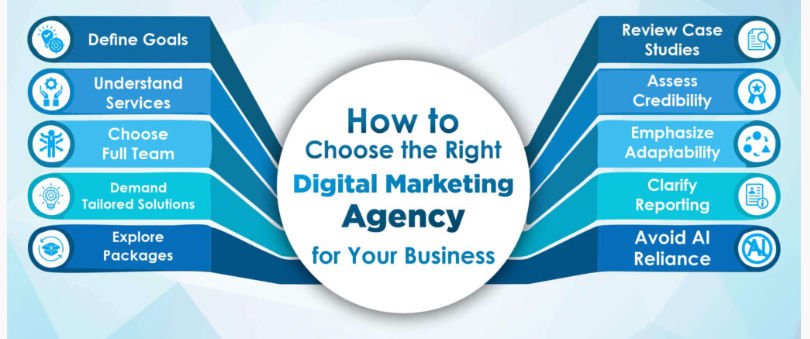
1. Define Your Goals and Constraints First
Before you contact any agency, first decide what you actually want from digital marketing. It can be more leads, more online sales, or better visibility for your business. You should also know your current situation, like how much traffic your website gets and how many people are becoming customers. Along with this, keep your budget, them and available time in mind. When you are clear about these things, it becomes easier to explain your needs and choose the right agency.
This ensures you compare proposals on the same brief and avoid scope creep.
2. Match Agency Type to Your Bottleneck
Every agency has different strength. Some are best at SEO, while other agency focusses more on paid ads, content, or complete marketing strategies. Before selecting one, think about what is holding your business back right now. Also, clarify which marketing channel can bring the best results for you in the next 6-12 months. Once set this, look for an agency that is good at the area where you need the most help.
3. Vet Case Studies for Context, Not Just Logos
When you check an agency’s case studies, don’t focus only at the big names they have worked with. Try to see what the client’s situation was before the work started, what the agency actually did it, and what results they really achieved. FOR Example: if leads, sales, or customers. This will give you a better idea of what the agency can actually do for a business.
4. Understand Their Strategy and Trade-Offs
A strong proposal explains:
Why certain channels are prioritized.
What will be deprioritized or excluded.
How success will be measured and reported
5. Confirm Team, Communication, and Reporting
Ask:
Who will strategize, execute, and approve work?
How often will we meet, and what will reports include?
Do reports tie activity to decisions and outcomes (not just impression)? You should have access to senior strategy, not just a junior coordinator.
6. Ensure You Own Your Accounts and Data
Before signing:
Confirm in writing that you own ad accounts, analytics, website, content, and CRM data.
Ensure you retain access even if the relationship ends.
Agencies that resist this are creating dependency, not partnership.
7. Scrutinize Pricing, Scope, and Contract Terms
Get clarity on:
What is included in the fees (strategy, execution, creative, reporting).
What is excluded or billed separately (media spend, software, extra revisions).
Contract length, cancellation terms, and handover process.
Month-to-month or 90-day pilots are preferable to rigid year- long without performance reviews.
8. Check References and Verify Claims
Ask for two client references you can actually call. Independently verify claims about results, term expertise, and AI/tech capabilities.
9. Look for AI and Automation Capabilities
In 2026, top agencies leverage AI for:
Campaign optimization and predictive audience modelling.
Content intelligence and personalization.
Real-time dashboards and attribution.
If an choose the right digital marketing agency cannot explain their AI/tech stack, they may be operating with outdated playbooks.
10. Assess Cultural Fit and Partnership Mindset
The best choose the right digital marketing agency feel like partners, not vendors.
Explain strategy in language you understand.
Proactively bring insights and recommendations.
Align with your company’s pace and values.
What is the 3-3-3 Rule in Marketing?
The 3-3-3 rule is a prioritization and attention framework used to structure marketing messages and engagement.
Version 1: Attention and Conversion Flow
The version focuses on how quickly you capture and convert attention:
3seconds: Your ad, landing page, or content must stop the user’s scroll and communicate them, what it is and who it’s for within the first three seconds.
3words (or sentences): Your main core value portion should be expressible in sentences/scenes.
3minutes: A genuinely interested viewer should be able to understand your offer, see offer, learn what happens next, and take action within engaging the content just in three minutes.
This version explained above is especially useful for evaluating ads, landing pages and cold outreach.
Version 2: Audience-Message-Channel Matrix
Another interpretation structures strategy around:
Audiences: Identify your primary, secondary, and tertiary target segments.
Messages: Develop a core value proposition that addresses the specific needs of each audience.
Channels: Select the three main platforms or mediums through which you can reach your target customers.
This creates a 3*3 matrix (nine boxes) that defines where you focus resources-and what to cut.
Version 3: Consistency for Social Posting (Niche Use)
In some niches like real estate social media, the 3-3-3 rule is used as a consistency floor:
Try to Post 3 times a week.
Across 3 types of content (e.g., educational, social proof, promotional).
And engage with 3 other accounts for every post you make.
When evaluating an agency, ask which version they use how they apply it to your campaigns.
What is the (70-20-10) Rule in Digital Marketing
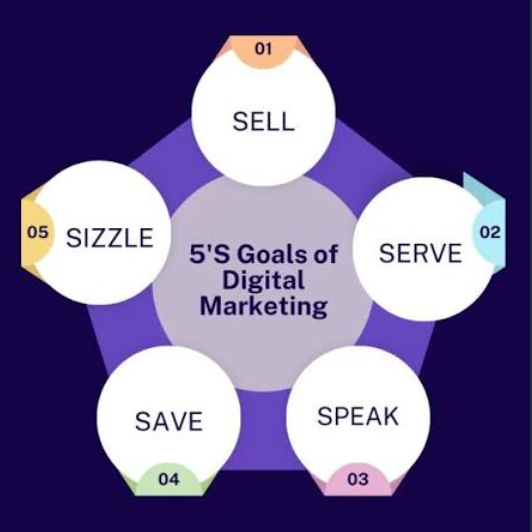
The 70-20-10 rule is a budget and resource allocation structure that helps businesses to balance stability, growth, and innovation. It’s spready used for paid media, content, and overall marketing spend.
The core Breakdown
70%- Proven strategies (core/now)
Collect the majority of your budget to channels and tactics with a documented track record of positive returns.
20%- Emerging opportunity (Next/Growth)
Invest in newer strategies showing early promise but now yet fully optimized.
Examples: A new social platform, a fresh content format, or an audience segment you are beginning to scale.
10%- Experiments (New/Moonshots)
Reserve a small portion for high-risk, high-reward tests that could become your next big channel.
Examples: New ad formats, AI-driven creative tests, viral trends, or startup tools.
Why It Works
This split ensures you:
Protect revenue by funding what already works.
Systematically test and scale promising ideas.
Upgrade/innovative without jeopardizing core performance.
Agencies that apply 70-20-10 transparently will show you exactly how your budget is distributed at the different level of risk and when they rebalance (often quarterly).
What Are the 5’s of Digital Marketing
The 5C’s of digital marketing is a customer- centric structure that helps business design strategies around the modern buyer’s journey. While variations exist, a common and practical version includes
Company
Start by understanding your brand’s positioning, capabilities, and unique value proposition. Consider these important questions:
A reliable digital marketing agency will first assess your company’s strengths and weaknesses before recommending suitable strategies and marketing tactics.
A good agency starts or completes itself by understanding your company before prescribing tactics.
Customer
Deeply evaluate your ideal customer profiles (ICPs):
Firstly: Demographics, psychographics, and behaviour
Pain point, goals, and decision criteria.
Where they spend time online and how they prefer to buy.
Agencies should show how each channel and message maps to specific customer segments.
Content
Content is the fuel of digital marketing. The 5C’s emphasize creating content that:
Educates, entertains, or inspires (not just sells)
Matches each stage of the buyer’s journey (awareness, consideration, decision).
Is optimized for search, social and email distribution.
Evaluate and clarify the agency’s content quality, strategy, and ability to repurpose assets across channels.
Convenience
Convenience is a competitive advantage in 2026. This C focuses on reducing friction in the customer experience:
Fast, mobile-friendly websites.
Clear calls-to-action and simple forms.
Multiple contract and purchase options (chat, phone, checkout)
how to choose the right digital marketing agency should audit and improve conversion paths, not just drive traffic.
Cost
This does not just mean your marketing budget-it includes the total cost to the customer (price, time, effort) and your cost to acquire and serve them. Ask:
Is your pricing aligned with perceived value?
Are you tracking CAC, ROAS, and LTV TO ensure profitability?
Does the agency’s pricing model (retainer, project, performance) match your risk tolerance?
A strong agency will tie marketing spend directly to these cost and revenue metrics.
Red Flags to Avoid While Choosing a Digital Marketing Agency
Checklist to be reported:
Guaranteed rankings or results with no caveats.
No access to your own ad accounts or analytics.
Long-term contracts without performance review clauses.
One-size-fits-all packages with zero customization.
Inability to explain their AI/tech stack or attribution approach.
Reports should be focused on vanity metrics (impressions, likes) instead of leads, sales, or revenue.
Final Tips Before You Sign with Agencies
Use this quick tip list to compare finalists:
Goals, baseline, budget, and constraints documented.
Agency type matches your biggest bottleneck.
Case studies include context, timeframe, and outcomes.
Strategy explains priorities and trade-offs.
Scope, exclusions, and additional costs are explicit.
Delivery team and communication cadence are known.
KPIs connect activity to business outcomes (CAC, ROAS, LTV).
You retain ownership and access to accounts and data.
Contract, notice period, and handover terms are acceptable.
References and claims verified independently.
Conclusion

While choosing the right digital marketing agency, don’t just chase the biggest name when picking a marketing agency. Focus on finding who is the fittest or suitable for your goals, budget, and growth stage. Using these practical modals like the 3-3-3 rule, 70-20-10 allocation, and the 5 Cs will help you ask sharper questions and spot the best proposals. When you have done rightly, your agency becomes a true growth partner stops being not just another vendor.